Answers
For The Minimum Viable Brand Strategy for Founders Moving at High Velocity, prepare brand name, industry, style, colors, audience, and usage context. Keep a clear decision boundary before acting on the result.
Criei can support this workflow: create a logo brief and generate logo drafts. Review the result against brand clarity, style consistency, contrast, legibility, and export needs.
Key takeaways
- Focus on a Minimum Viable Brand to avoid early-stage project paralysis
- Always create a written brief before using AI generation tools
- Evaluate logos based on brand personality rather than subjective 'likability'
- Prioritize simple silhouettes for better scalability across digital platforms
The Speed vs Quality Paradox in Early Stage Branding
Most founders face a frustrating dilemma during the first week of a project where they need a professional look to gain credibility but can't justify spending thousands of dollars on a design agency before achieving product-market fit. This tension often leads to 'brand paralysis' where a project stalls because the creator feels the visual identity isn't quite right. The reality is that your first logo is rarely your last, and the goal of a Minimum Viable Brand isn't to win design awards but to provide a cohesive visual container that allows your audience to take your idea seriously while you focus on building the core product.
In practice, that means slowing down long enough to give Criei the context a human would ask for: what you are trying to decide, what details are visible, and what kind of next step would be useful.
Defining Your Visual North Star Before You Generate
The biggest mistake people make with AI design tools is jumping straight to generation without a conceptual brief which results in generic and mismatched visuals. Before touching any software, you must define three core pillars: your brand personality, your primary audience, and your emotional hook. If your brand is a high-security fintech app, your visual language should lean toward bold weights and geometric stability, whereas a wellness community might favor organic shapes and muted palettes.
Documenting these traits in a simple three-sentence brief ensures that when you use a tool like Criei to generate drafts, you are judging the output against a strategic goal rather than just personal preference.
A useful session should reduce uncertainty, preserve the evidence behind the result, and make the next action easier to choose. More screens do not help when the underlying context is incomplete.
The Iterative Loop of AI Assisted Logo Design
Modern AI logo makers function best as collaborative partners rather than magic buttons that produce a final file on the first click. a practical workflow involves a three-stage iterative loop: generation, critique, and refinement. Start by inputting your core keywords into a generator to see how the AI interprets your niche, then identify specific elements like a certain font weight or a minimalist icon style that resonates.
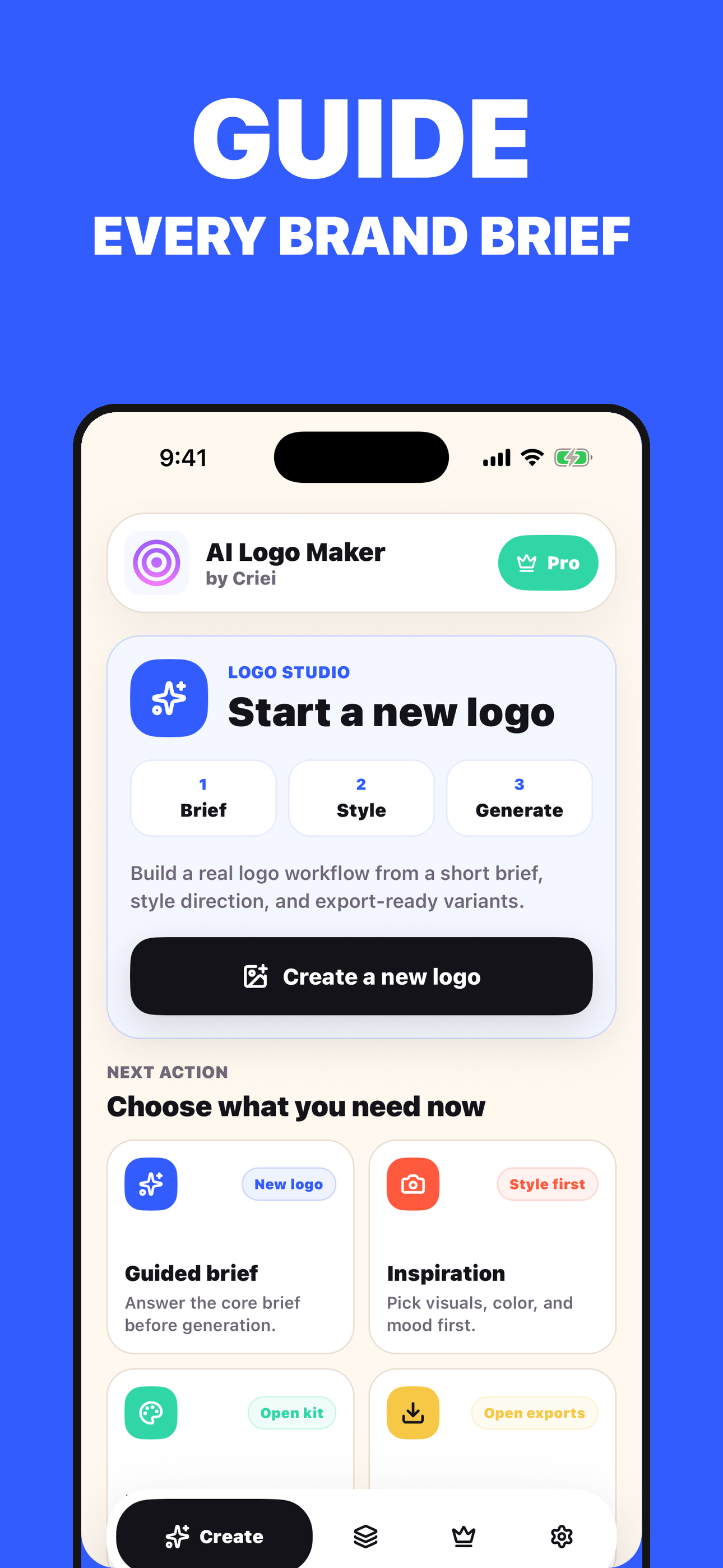
Apps like Criei allow you to move from a chat-based brief to specific logo drafts, which helps bridge the gap between a vague idea in your head and a tangible visual direction that you can actually use on a landing page or pitch deck.
Criei helps users create a logo brief and generate logo drafts, but the result should still be checked against the user's own context and any professional boundary that applies.
Technical Essentials for a Scalable Visual Identity
A logo is only as good as its versatility across different digital and physical mediums. When finalizing your MVB, you must ensure your chosen mark works in high-contrast monochrome for small favicons and in full color for social media headers. Avoid overly complex gradients or thin lines that disappear at small scales.
While AI can provide the creative spark and the initial composition, always look for designs that possess a strong silhouette. This technical foresight prevents the need for a total rebrand three months down the line when you realize your logo is unreadable on a mobile screen or too expensive to print on merchandise.
The best repeat users build a small history. Saved sessions, notes, screenshots, or previous results make future decisions faster because the app has a clearer personal reference point.
Moving from Draft to Deployment
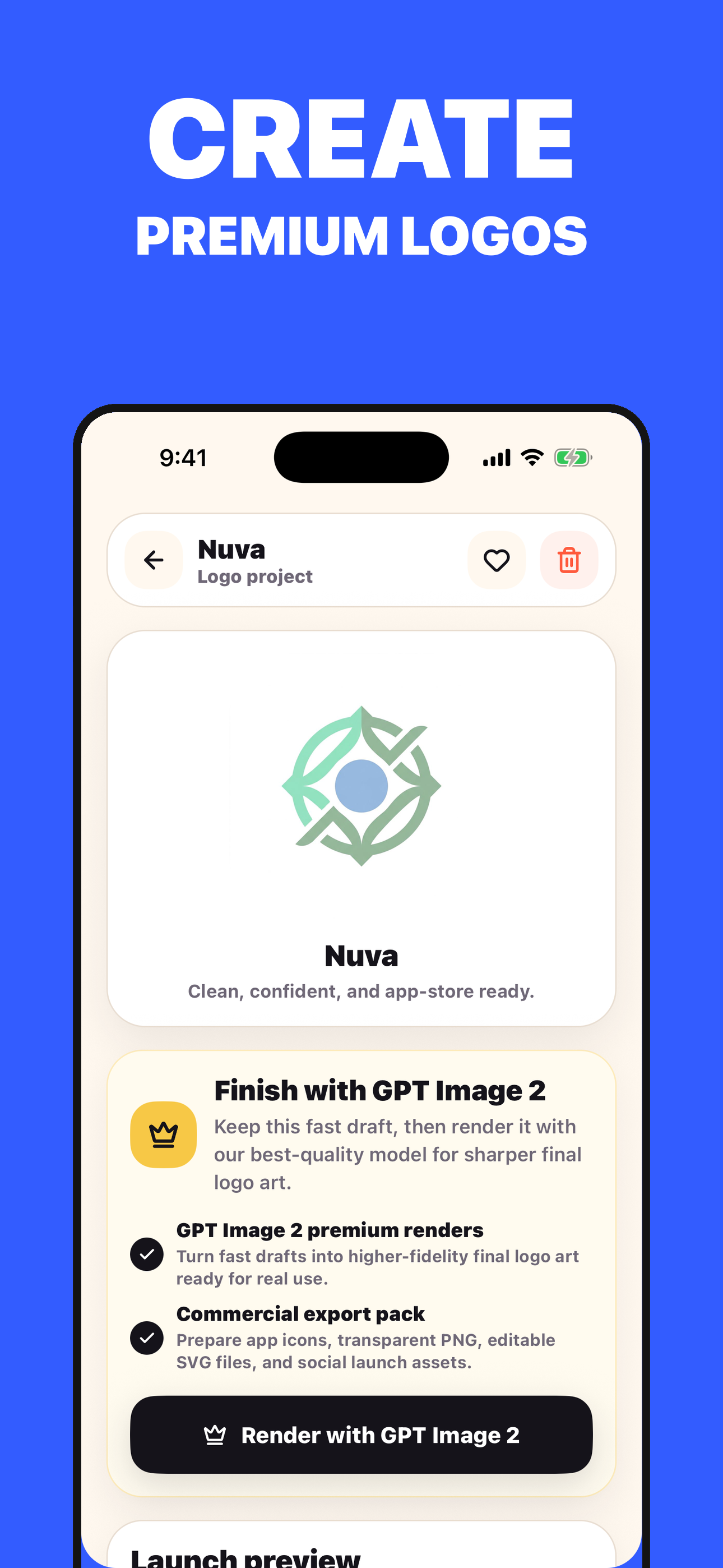
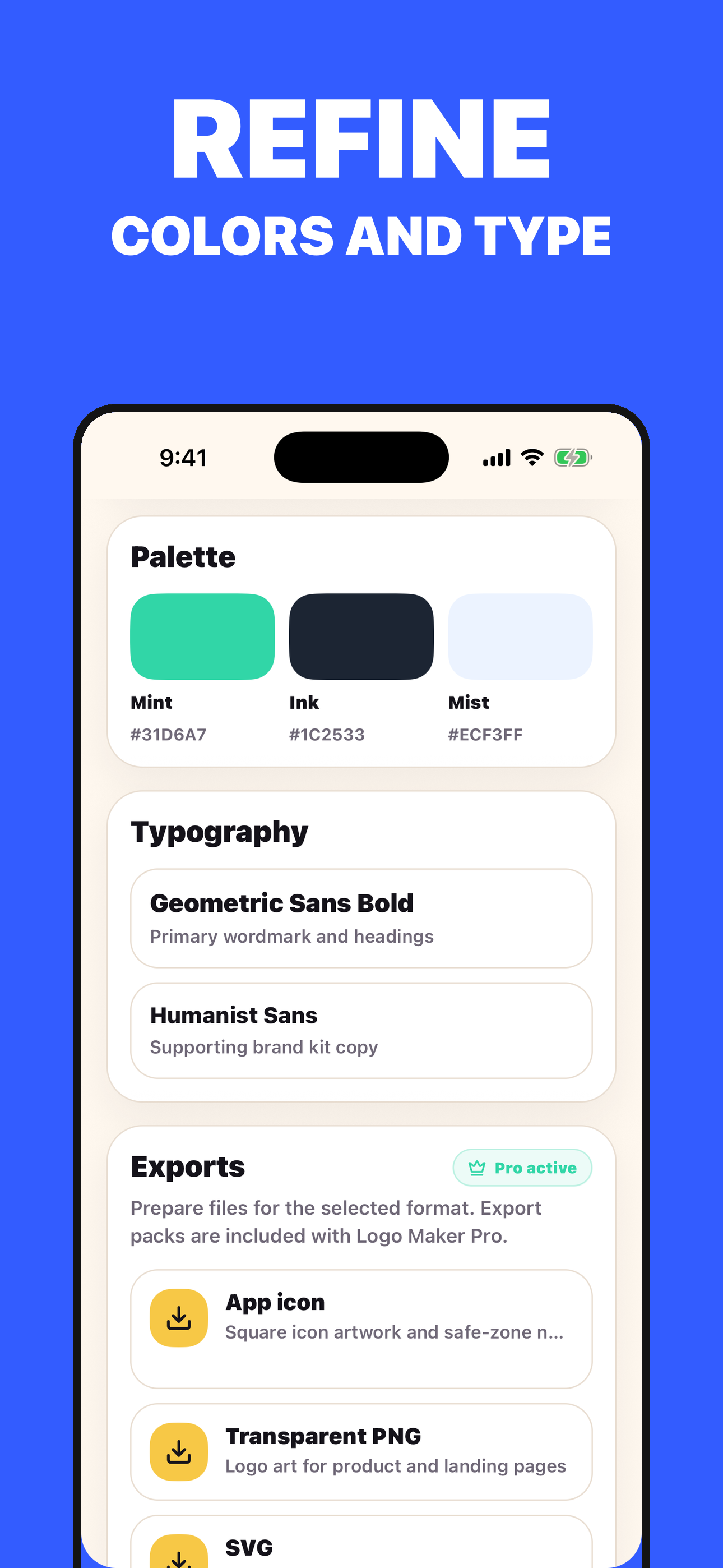
Once you have a visual direction that meets your strategic criteria, the final step is to commit and ship. The purpose of a Minimum Viable Brand is to move you out of the design phase and into the market. Use your generated logo to establish a basic style guide including one primary color, one secondary color, and a consistent typeface.
This small amount of structure creates a professional 'veneer' that builds trust with early adopters. Criei supports this workflow: create a logo brief and generate logo drafts. Start from brand name, industry, style, colors, audience, and usage context, then review the result against brand clarity, style consistency, contrast, legibility, and export needs.
In practice, that means slowing down long enough to give Criei the context a human would ask for: what you are trying to decide, what details are visible, and what kind of next step would be useful.
Ready to start your brand concept?
Download Criei on the App Store or Google Play.
A useful session should reduce uncertainty, preserve the evidence behind the result, and make the next action easier to choose. More screens do not help when the underlying context is incomplete.
Product moments: Criei
Criei supports this workflow: create a logo brief and generate logo drafts. It is designed around brand name, industry, style, colors, audience, and usage context, and its output should be reviewed against brand clarity, style consistency, contrast, legibility, and export needs.
Continue in Criei when you have brand name, industry, style, colors, audience, and usage context ready and want to save the result.
Before you download.
What is the practical takeaway from The Minimum Viable Brand Strategy for Founders Moving at High Velocity?
For The Minimum Viable Brand Strategy for Founders Moving at High Velocity, prepare brand name, industry, style, colors, audience, and usage context. Keep a clear decision boundary before acting on the result.
Which inputs make this article more useful?
Prepare brand name, industry, style, colors, audience, and usage context. Specific context makes the result easier to inspect and compare.
When does this workflow need outside confirmation?
Trademark checks and final brand ownership decisions need separate review. Seek the appropriate qualified source when the decision affects health, safety, money, or legal rights.
Practical checklist
Trust note
AI-generated logos are excellent for rapid prototyping and MVPs, but for high-stakes trademarking or global scaling, we recommend eventually consulting with a legal expert and a professional brand designer.